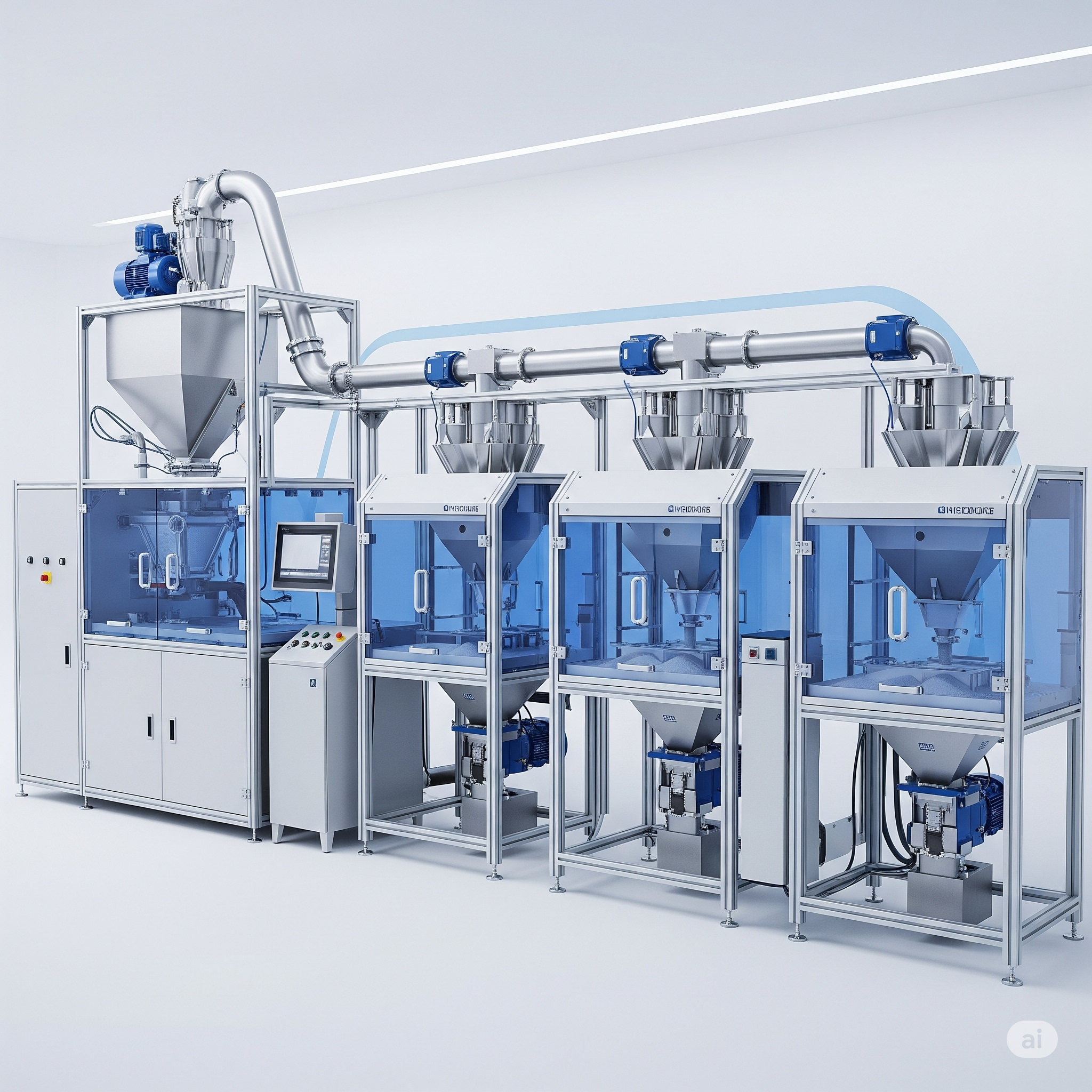
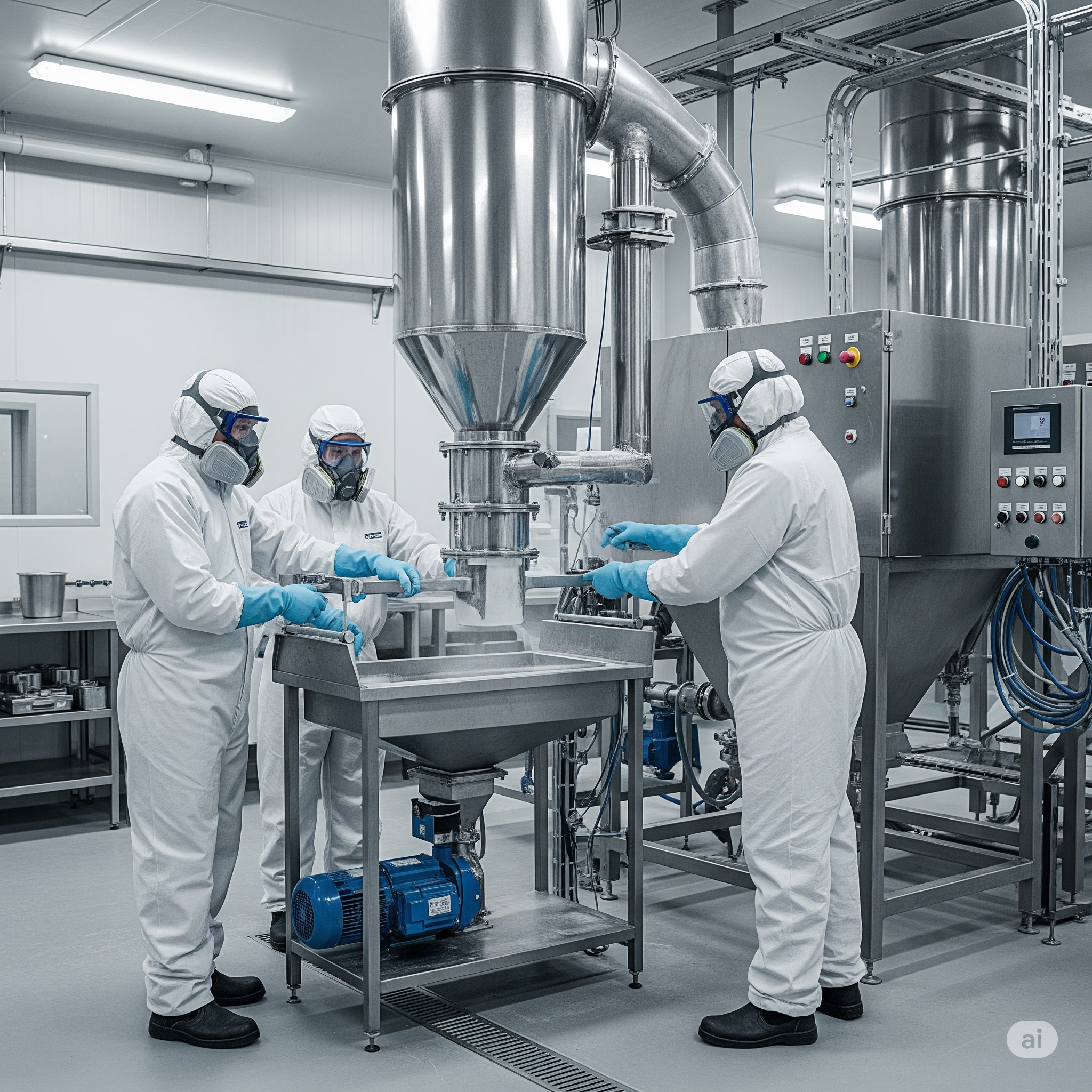
Powder handling solutions play a crucial role in the dairy industry by managing and transporting powdered materials such as milk powder, protein powder, and other powdered additives. These systems and machines optimize production, packaging, and storage processes, preventing contamination, material loss, and quality degradation.
Applications in the Dairy Industry
Powder handling systems are essential for various stages of dairy production, including:
Milk Powder Processing
Automated transfer of milk powder in production and packaging lines.
Protein Powders and Additives
Precise handling of powdered ingredients for the production of high-protein or specialty dairy products.
Blending of Ingredients
Accurate mixing of multiple powder types in precise proportions for composite products.
Advantages of Powder Handling Solutions
Precision in Transfer and Mixing
These systems ensure accurate measurement and transport of powdered materials, enhancing the quality of the final product.
Increased Efficiency
Automated operation speeds up production and reduces manual labor.
Minimized Contamination and Waste
Proper handling techniques reduce material loss and contamination risks.
Hygiene and Safety Compliance
Designed to meet strict hygiene and safety standards in the dairy industry.
How Powder Handling Systems Work
These systems use suction, air pressure, or specialized conveyors to transfer powders to production lines. The powdered materials are then automatically weighed, blended, and moved to the next stage of processing. This automation minimizes human intervention while ensuring accuracy and consistency.
Key Categories of Powder Handling Solutions
In the dairy and beverage industries, powder handling systems are designed with a strong emphasis on
hygiene, gentle product handling,
precise dosing, and contamination prevention.
Storage & Discharge Systems
Reliable storage and controlled discharge are the first steps in any powder handling process.
Hygienic Silos & Bins: Stainless steel construction with polished interiors and sloped bottoms for complete, clean discharge, often with Clean-In-Place (CIP) capability.
FIBC (Big Bag) Unloaders: Dust-tight connections and controlled emptying to prevent airborne contamination.
Drum & Container Handling: Safe loading and unloading of smaller containers with containment features.
Feeding & Dosing Machinery
Precision feeding and dosing ensure consistent product recipes and quality control.
Hygienic Screw Feeders: Polished stainless steel with quick-release mechanisms for easy cleaning and accurate delivery.
Loss-in-Weight Feeders: Highly accurate continuous dosing for precise ingredient measurement.
Vibratory Feeders: Gentle, consistent feeding ideal for fragile or cohesive powders.
Rotary Valves (Airlocks): Controlled discharge from hoppers or silos into pneumatic conveying systems.
Conveying Systems
Efficient and gentle powder transfer is vital for maintaining product integrity.
Powder handling solutions improve efficiency and quality by optimizing transport, storage, and mixing of powders. They ensure precision, hygiene, and minimal waste, allowing producers to deliver high-quality products to the market.